Focus Area
Learning Design
Timeline
6 weeks
2024
Role
Learning Designer | Developer
Platform
Web-based AI application
Deliverable
AI-generated differentiated PBL unit plan
+67%
+24%
+38%
TailorLearn
An AI Curriculum & Differentiation Generator that helps K–6 teachers create personalized, standards-aligned PBL units by integrating curriculum goals with student interest data.

Problem Space
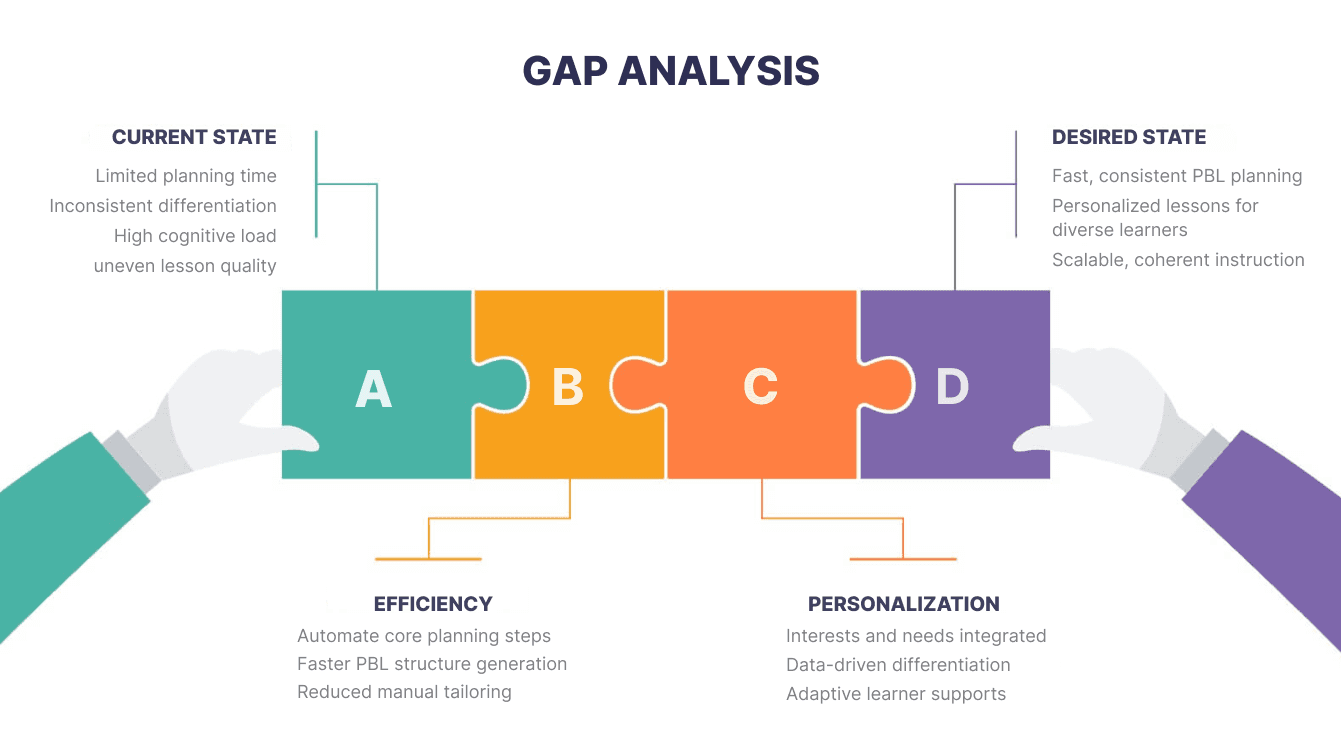
Elementary teachers struggle to design project-based learning (PBL) units that meaningfully integrate individual student needs, interests, and learning differences — especially under time pressure.
Target Audience
The primary audience for this project is K–6 teachers who design project-based learning units and need support differentiating instruction for diverse student needs.
Learning Design Framework
Methodology
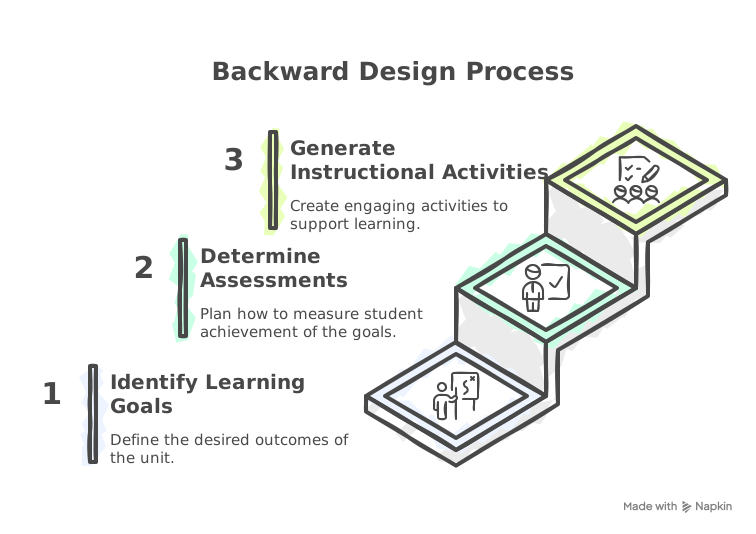
We began by structuring the AI’s logic using the principles of Backward Design:
Solution
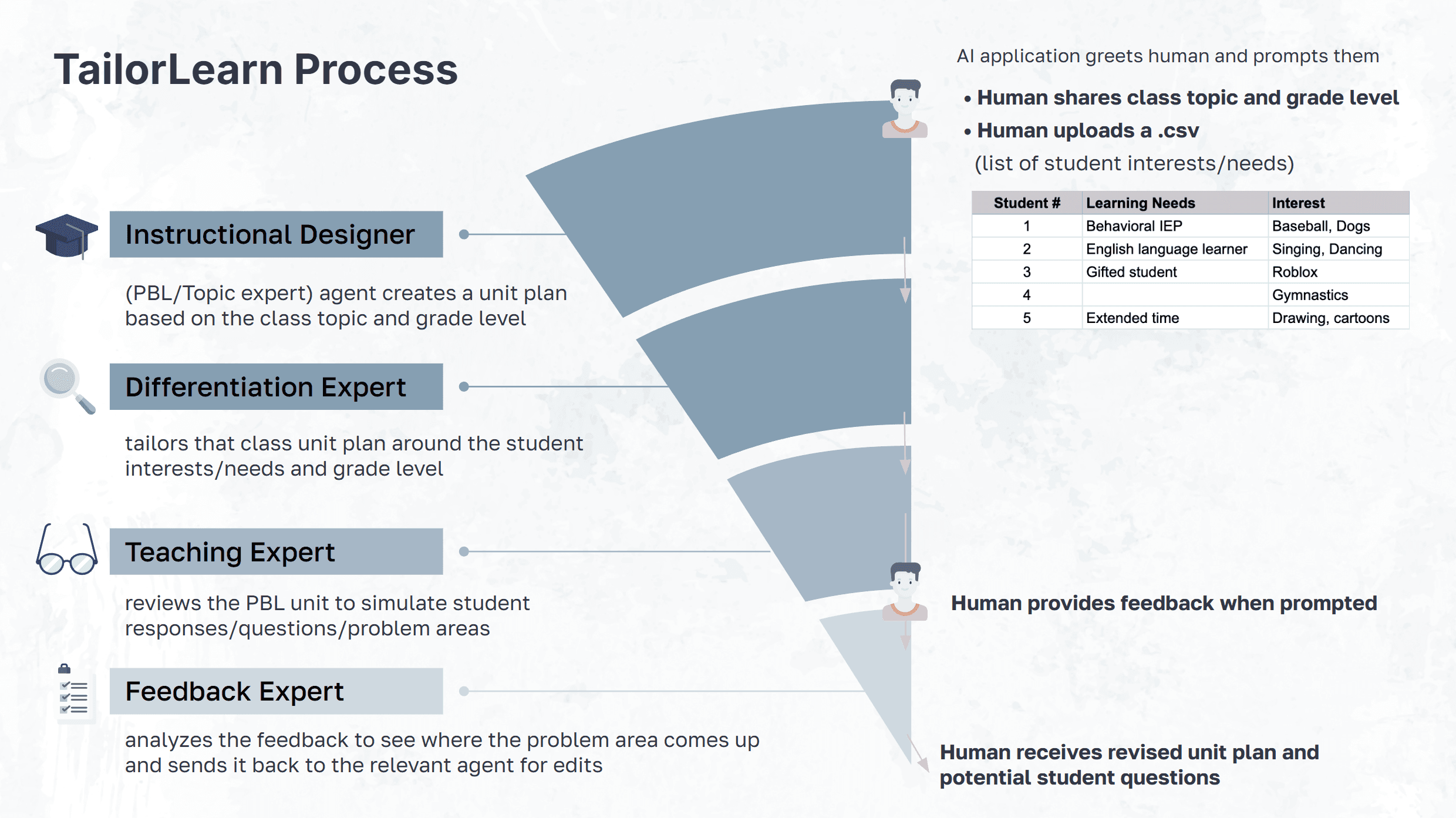
Our final outcome - TailorLearn allows teachers to upload curriculum topics and student preference data, then receive an adaptive, differentiated PBL unit that highlights activity ideas, potential misconceptions, and tailored pathways for diverse learners.
Design Rationale
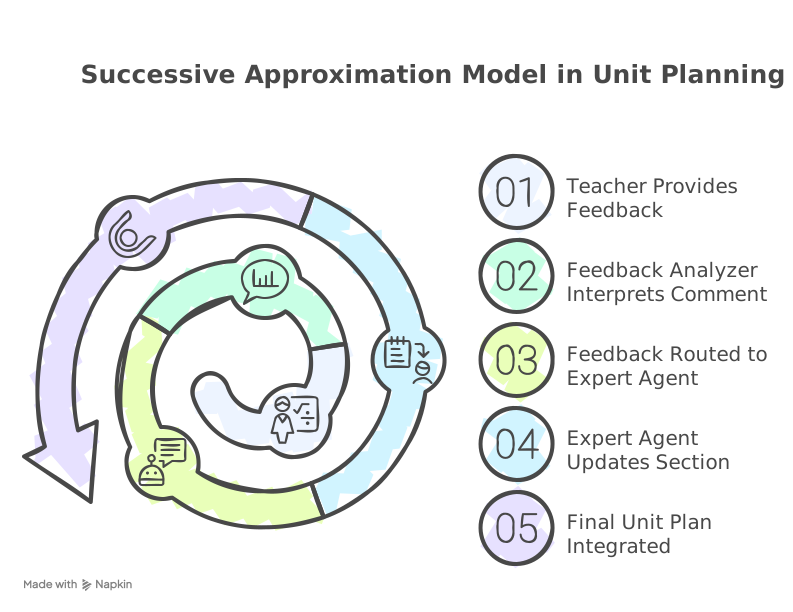
Our process required designing how the agents communicated and revised each other’s outputs, and we structured this interaction using the Successive Approximation Model (SAM). Instead of following a linear revision process, we implemented SAM’s iterative cycles of small, rapid adjustments to refine the unit plan continuously.
This approach reflects SAM’s emphasis on rapid prototyping, enabling efficient iteration and allowing the tool to refine instructional components without restarting the whole design.
To operationalize this in an AI system, we:
Ensured the PBL/Topic Expert agent always produced clear learning objectives first.
Required assessment suggestions before any activities were generated.
Directed the Differentiation agent to align all adaptations (scaffolds, extensions, interest-based tasks) with these objectives.
This allowed the system to maintain instructional coherence and avoid activity-first planning.
Impact
After completing the development, we conducted a usability test with teachers, and the results showed clear improvements across planning efficiency, clarity, and differentiation depth.
+67%
faster lesson planning efficiency
Teachers completed lesson PBL plans in 1/3 time when core structuring steps were automated.
+24%
higher clarity and instructional relevance
Lessons were rated clearer and more aligned to student interests and learning goals.
+38%
richer differentiated learning pathways
Plans featured more personalized supports tailored to diverse learners.